Is getting published all that great? If your goal is to reach readers, then it’s possible you don’t need a publisher. Before the internet, Publishing (and the process of reaching readers) used to work in a very straightforward and rigid way.
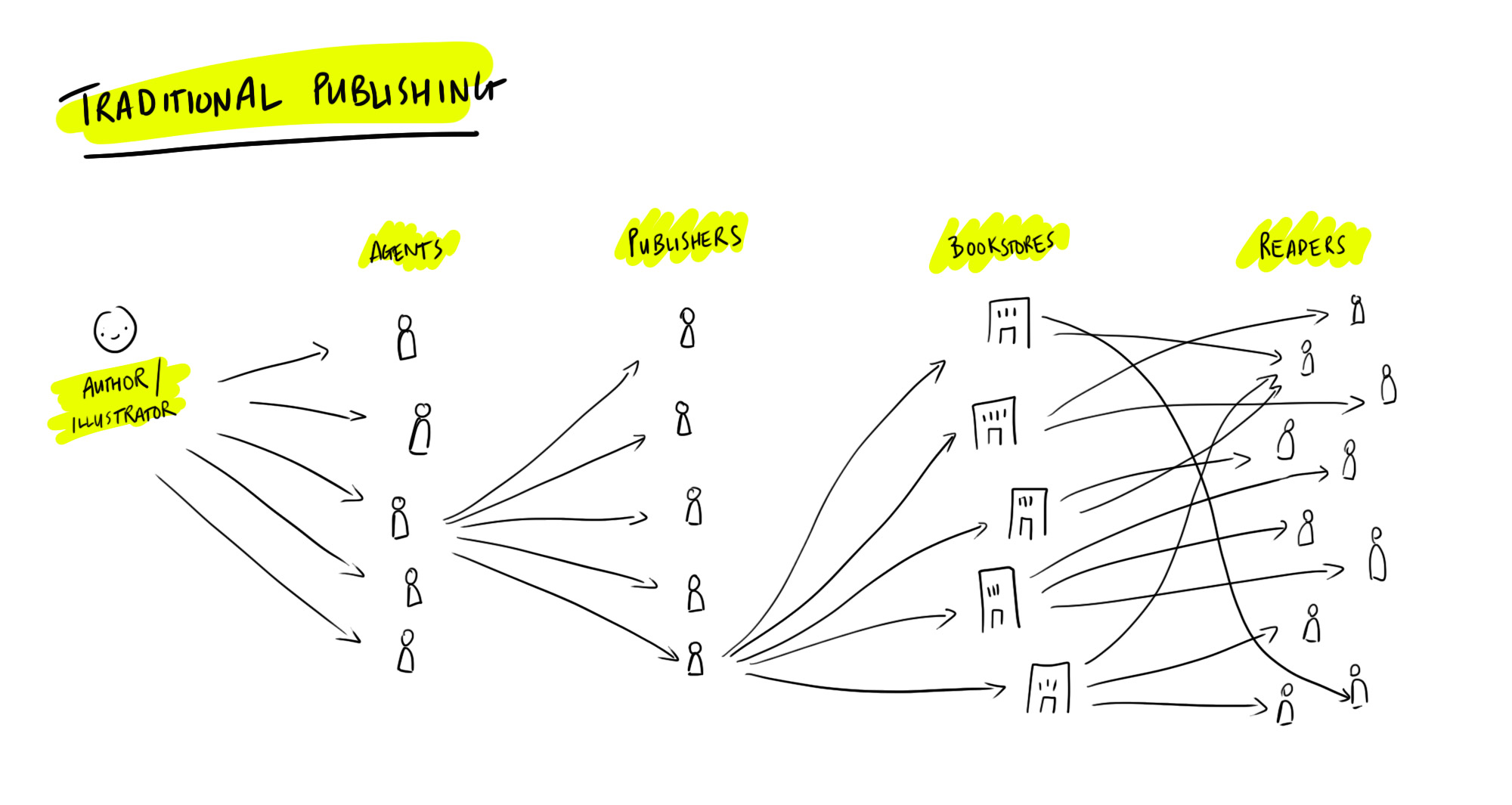
1. The artist makes their work.
2. The artist submits their work to many agents.
3. An agent signs the artist and then goes off to find a publisher to multiply the work.
4. The publisher signs the artist (via the agent) to help them make their book.
5. The publisher then distributes that book to booksellers.
6. The readers then purchase the book and consumes the work.
But now, we’re in a world where it’s possible to go from 1 to 6 without all the steps in between. The sequential, gated process of curation that an agent, publisher, and bookseller controls is not the only way (although it’s still a very valid and important one).
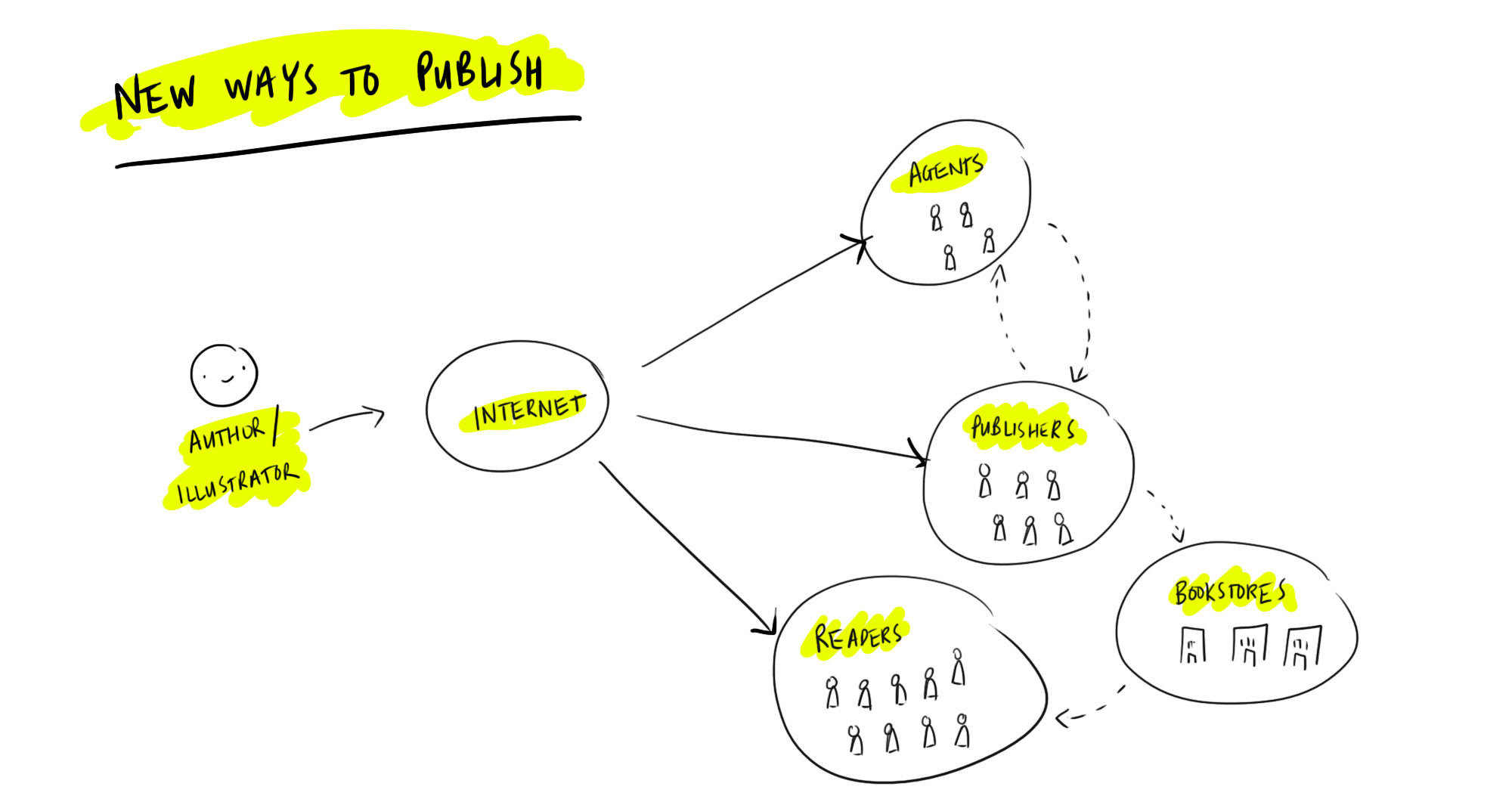
For this reason, it seems that there’s never been a better time in history to be an artist because it’s easier than ever to reach readers or your audience. The only thing that’s still the same is step 1: The artist needs to make the work.