
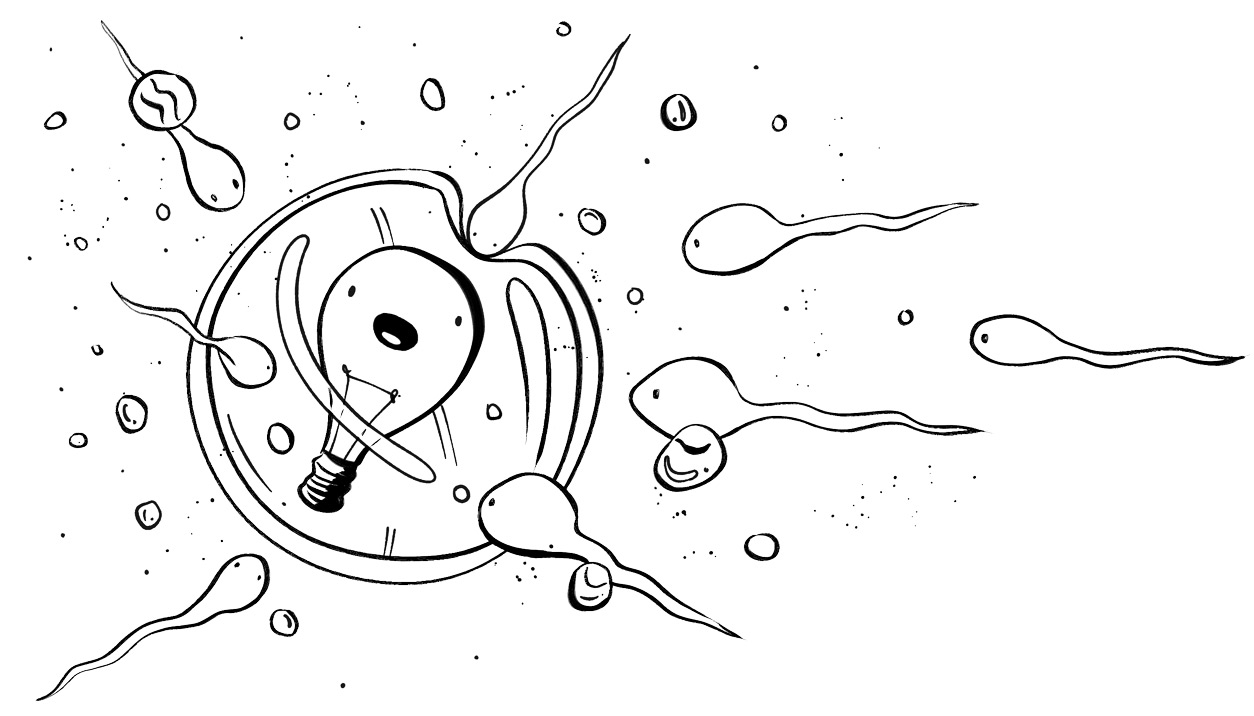
People ask me, ‘Where do you get your ideas?’ And, like most writers, I have the standard answer, “From life.” But I know it’s not a good answer. It’s vague, unhelpful, and to be honest, a bit of a cop-out. A better answer would be, “It’s complicated” or “I actually don’t know”. But that’s also unhelpful although slightly more accurate. It’s challenging to try and unravel where they really do come from. Every project and story is different. There’s no formula. When I hit on an idea, it’s often a surprise to me too. What I do know is that most people don’t have the time or attention span for me tell them the whole answer. Here’s a short version of the things I currently believe to be the biggest influence on where I get ideas.
Input happens constantly
I think of every second of life as ‘input’. The thing I ate for breakfast, the people I saw on my commute, the pigeon that pooed on my shoulder today. Every sound, image, or feeling that enters through my senses, whenever I’m doing anything, ends up in my brain.
Most of the time, I’m not remotely aware of the sheer volume of information going in to my brain but it’s there because I find it at the most unexpected times.
Like most people, I don’t consciously remember every little thing I saw, said, did, or smelled. But it’s there. I know it’s there because I remember things I don’t even know I remember at the weirdest times. For example, I couldn’t tell you the exact words I used when I was chatting with someone in line at a cafe yesterday. But then, years later, I’ll remember the exact conversation when something seemingly unrelated triggers it. There’s no obvious logic to what will trigger a memory, and so that makes it difficult to codify and teach. Our brains are phenomenal at taking in and storing information. Most of the time, we’re not aware of what’s going in.
Timing is critical but serendipitous
The sequencing of events is influential in how my brain decides to mash things together at any given moment. These events don’t have to be linear, or even close to one another. Again, it’s pretty illogical and often, multi-sensory.
I might experience a taste as an adult. For some complicated reason (I’m sure a neuroscientist could expand on that), it triggers a memory of an old neighbourhood dog I knew when I was eight years old. The thought of the dog reminds me of a noisy neighbour who used to talk too loudly but cooked the best chicken schnitzels I ever ate. And then, yep, you guessed it, there’s an idea for a crazy chef who runs out of chicken and engages the help of a dog to go on chicken hunt adventure.
As terrible as that idea is, I think it demonstrates an important aspect of the way our brains work. The basic idea is that every brain is full of ephemera, and it’s a jumble. Sounds a lot like ‘life’, right? At least with life, there’s a definite beginning and end.
Paying attention to yourself is important but difficult
These random memory triggers and weird convoluted connections between illogical events happen to me all the time. I’m sure they happen to you too. Our brains are not very different after all. So, I can only postulate that maybe the difference between me and people who ‘don’t have ideas’ is they don’t notice when it happens? The art of noticing takes work and practice. I plan to help with that in this journal over the coming months because there are definite tools and techniques for building this idea-catching muscle in yourself.
So yes, ideas come from life, and life is complicated. The real question we should be asking isn’t “Where do you get your ideas from?” It’s “How do you notice and idea and decide on which one to explore further?” THAT is much harder, and it’s the subject of a whole other post.