Everyone knows that not every kid who plays sport will end up a world number one. We know that not every kid who picks up a musical instrument will end up with a triple platinum album. We know that every kid who enjoys cooking won’t be the next world-famous celebrity chef. And, despite this, we continue to play amateur sport, or amateur music, or cook casually for our friends for our whole lives.
Most of us don’t do this with drawing.
The drawing crisis
Almost every child before the age of 10 draws. The materials may be different (coloured pencil, crayon, markers, sand and sticks) and the subjects may be different (family, pets, the natural environment, laser-shooting dinosaurs) but almost every child makes marks on a surface.
As co-ordination and the ability to self-critique increases, the challenge for a child becomes to draw things more realistically; realism equals success. And, when realism doesn’t come or is more difficult to achieve for them then, say, their peers, drawing stops – they identify as someone who ‘can’t draw.’ Some scientists call this ‘the drawing crisis.’
I stopped drawing in high-school when it was ‘time to get serious about life’. I was one of the very few who drew beyond 10 years old – mostly because I could draw more realistically than others. But even then, my drawing stopped because of more ‘valuable things’ (i.e. money).
But, the idea of being an ‘Amateur Artist’ was never part of the discussion. In high school, the narrative was that I couldn’t do both. I had to choose – one path, one career, one direction.
And yet, I was encouraged to continue weekend sport, and continue to cook creatively, I didn’t play music but I know people who continued doing that as a hobby without any possibility of becoming a ‘pro.’
But now I’m pro
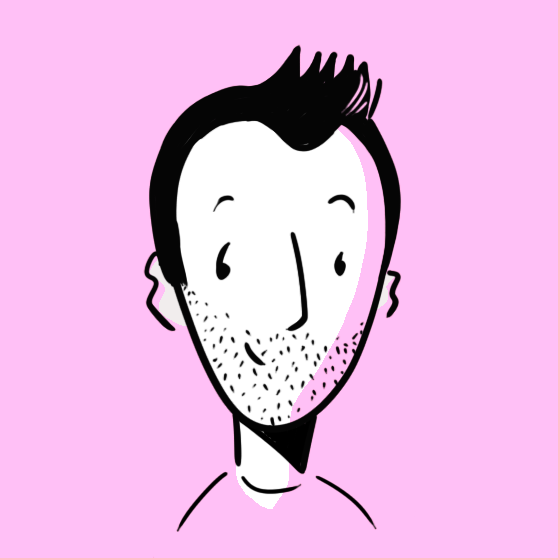
The ironic part of all this is that I found my way back to drawing after 20 years of doing other things as a profession – and now people pay me to draw and paint. It’s become a career. Not only that, but what I get paid to draw is not what anyone would call realistic – it’s fantastical, simple, a little child-ish; something a 10-year old child (or younger) would be proud of.
I don’t know how to ‘fix’ the drawing crisis, or whether it can or should be ‘fixed’. What I would love to see in the world are more people drawing for pleasure (not for creating ‘content’ and building audiences) – just as I take photos or play music without any hope of making something commercial from it.
What’s seems to be required is a shift; one that sees ‘realism’ in drawing not as it’s only end-state but one of many. To engage with drawings and visual art not for how they look but what they make us feel. To acknowledge ourselves as vulnerable and human; influenced by colour, shape, line and texture. We are, when it boils down to it, plants with complicated emotions. After sunlight, water, and food, perhaps what we need is art?