
Believable environments filled with intrigue are something that an author very rarely describes in a picture book text. But, it’s an area rich in possibility for a good illustrator and storyteller to exploit. It can add depth to the work, it can improve it’s repeat-value, and can help reader and child engage in a far deeper conversation about the context of the action than what the text describes. It’s, in short, what the great picture books do. But this isn’t just a thing about picture books, it goes right back to what great painters do.
Not so still-life
This image is a painting by Cezanne. It’s called “Still-life with Commode” (1883-87).
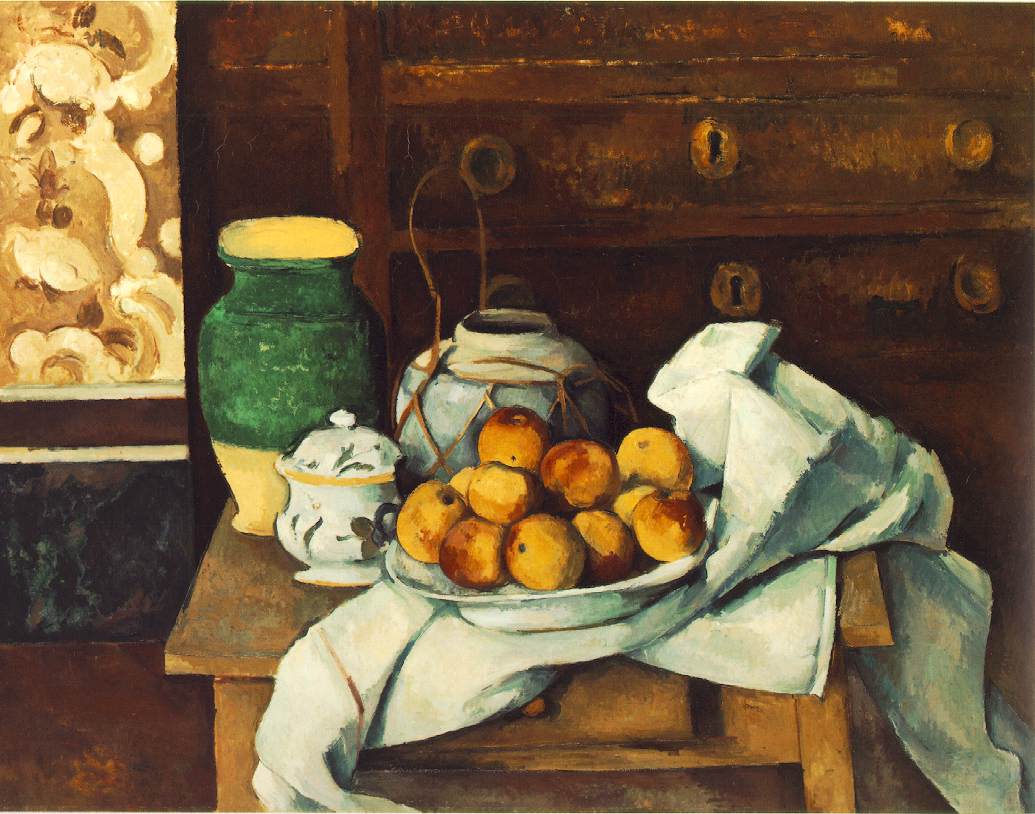
Now, in my opinion, the subject matter is relatively banal, but then again, so is the painting. We see some fruit, a few jars/vases, there’s nothing particularly human about it. It feels staged; something that Cezanne setup to paint, then put back once he was done. I mean, who puts a bowl of fruit in front of a set of draws?
In contrast, the image below from Van Gogh, a still-life called “A Still-Life with a Plate of Onions” (1889) invites the viewer into a story.
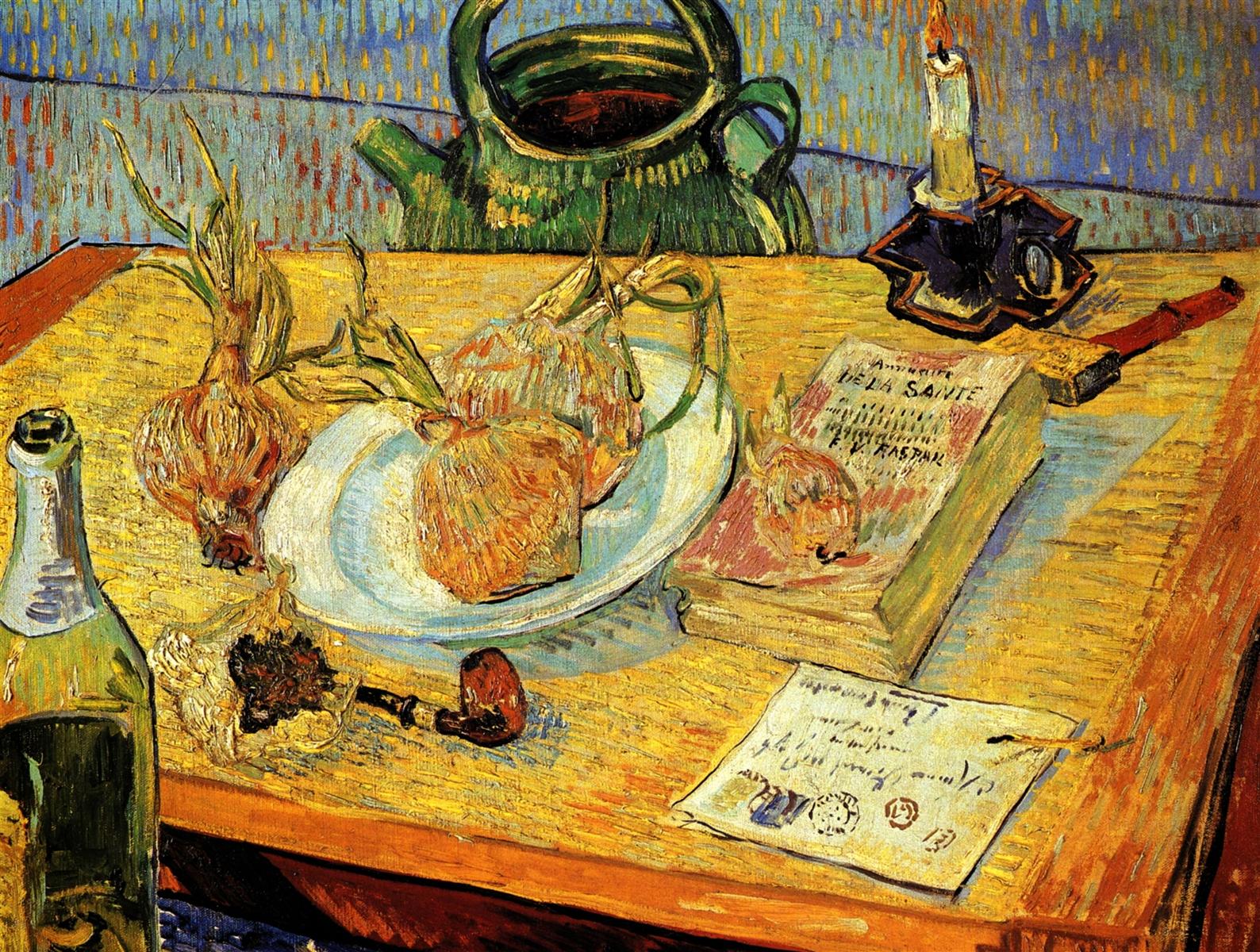
When I look at this image by Van Gogh, I’m not asking whether he set it up intentionally to paint or not. I’m asking questions about who was at the table and why. The pipe, the letter, the book, the half-consumed bottle of wine all indicate a human presence without explicitly showing a human. It invites my brain to invent my own stories from these disparate items. It draws me right in. Was Van Gogh really eating onions whilst drinking wine and smoking a pipe by candlelight?
Background stories
When I’m creating environments (like a living room) in my picture books, it’s easy to include all the tropes I associate with living rooms. A couch, some pillows, a TV, a bookshelf, and so on. It’s easy to forget the fun and human-ness I can bring to a simple environment like this. Does the couch seat have an indentation? What shape is it? Is the pillow askew? Are the books on the bookshelf scattered? Are there books missing? Is the TV on? If so, what’s on?
Backgrounds, and settings in general, give the illustrator a rich opportunity to tell stories through the pictures alone. It’s one of the most fun parts for me. And almost always, it’s the child that notices first.
A short thanks to Sarah Davis, Illustrator and Art Director at Walker Books Australia for her wonderful talk at a recent conference that got me thinking about how we can bring more intrigue into illustrations in picture books.